
How to calculate a Product's Carbon Footprint?
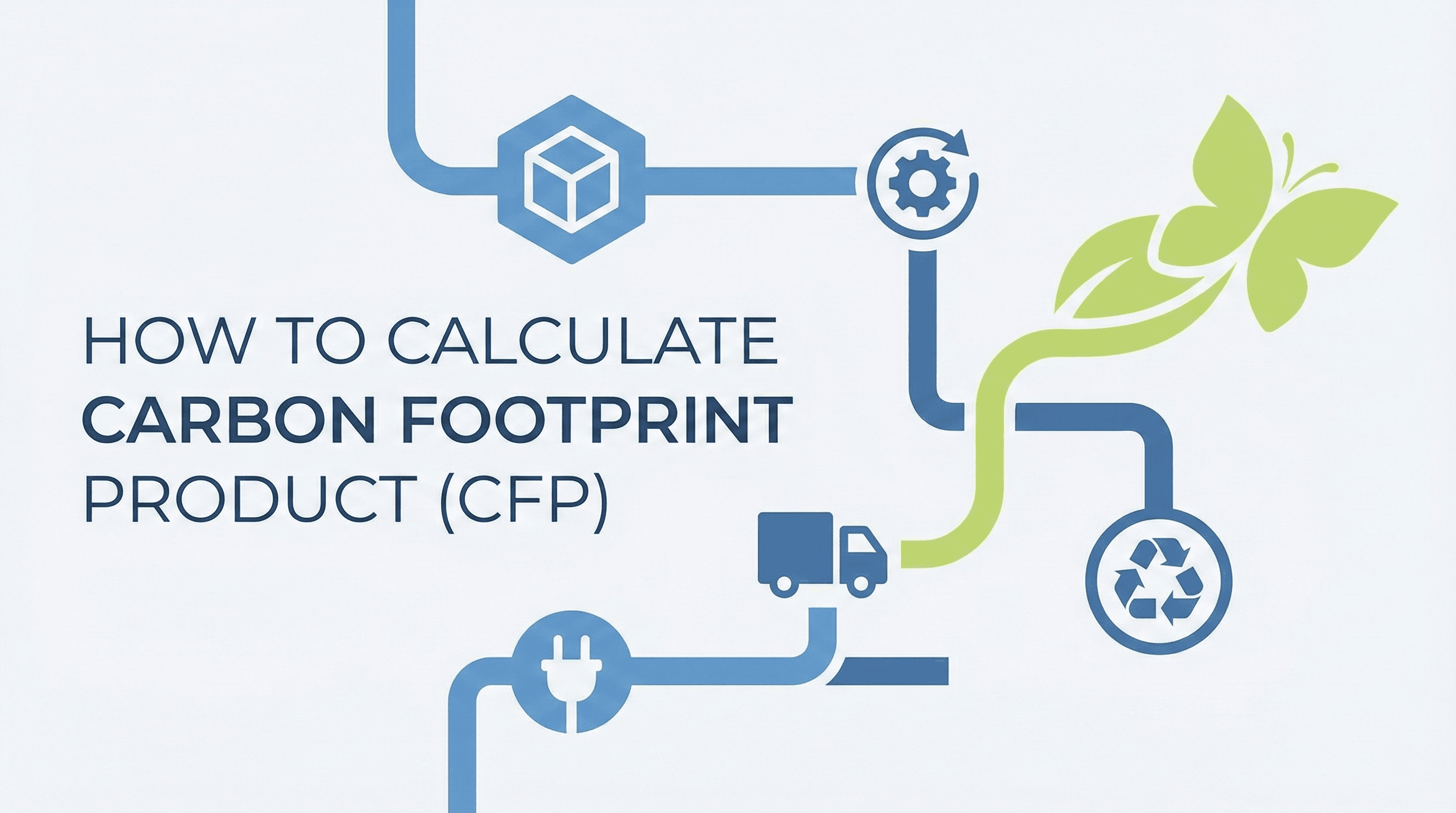
Calculating a Carbon Footprint of Product (CFP) is like tracking a budget, but instead of money, you track greenhouse gas emissions across a product's life cycle.
Here are the 5 main steps:
1. Goal & Scope
Start by choosing the product you want to assess and define its functional unit clearly. This is the reference unit you will use for the full calculation, such as:
- one 500 ml water bottle
- one t-shirt
Then set the system boundary for the study:
- Cradle-to-Gate (B2B): from raw materials through production until the product leaves the factory gate
- Cradle-to-Grave (B2C): from raw materials through production, transport, use, and end-of-life disposal
2. Data Collection
Next, gather data on every activity in the product life cycle that causes emissions.
For a B2C assessment, this usually includes:
- Raw materials: ingredients, quantities, and packaging
- Production: factory electricity, water, fuel, and waste
- Distribution: transport mode, shipment weight, and travel distance
- Usage: whether the customer needs extra water, electricity, or other resources to use the product
- Disposal: whether the product is landfilled, incinerated, or recycled
The quality of your CFP depends heavily on the quality of this data, so it is important to use real operational records wherever possible.
3. Calculation
Once you have the activity data, multiply each item by the relevant Emission Factor (EF). Standard EF databases can be downloaded from the Thailand Greenhouse Gas Management Organization (TGO).
Simple formula:
Activity data x Emission Factor = Emissions
Example:
10 kWh x 0.5986 kgCO2e/kWh = 5.986 kgCO2e
Calculate emissions for each life-cycle activity, then add them together to get the total carbon footprint for one functional unit of the product.
4. Verification
After the calculation is complete and the summary report is prepared, the results need to be verified by a TGO-registered verifier.
The verifier reviews your supporting evidence, such as utility bills, purchase records, and other documentation, to confirm that the data is accurate and traceable.
5. Registration
After verification, submit the completed documents to TGO for registration.
Once approved, you can apply to use the Carbon Footprint of Product label on your product so customers can see the verified footprint information.
CFP Is More Complex Than CFO
Calculating CFP is quite a bit harder than CFO. If you are not familiar with the difference, read CFO vs. CFP: Learn the key differences.
Want a Faster Way to Calculate CFP?
If you want a shortcut, picarbon makes CFP calculation much easier, cutting the process from months down to minutes.

